The Daily Yomiuri (DY) blasted the front page of their May 8th edition announcing their plan for the rescue of the Japanese economy.
There were five recommendations:
1) End manifesto-accelerated business slump
2) Both concrete and humans are important
3) Employment is source of reassurance
4) Seek domestic and external demand
5) Stay ahead of international competition by developing higher technologies
I couldn’t see the massive front page story on their web site. This editorial comes close [http://www.yomiuri.co.jp/dy/editorial/20100508TDY02T03.htm]
It seems that the DY is more a right-wing publication. They do not seem happy with the DPJ. They ought to be reminded that the Japanese economy has been mired for the past decade. It is nothing new. The right-wing LDP had been in power for fifty years. Certainly it is they who have left the Japanese economy in a shambles.
Here is my interpretation of Yomiuri’s “rescue” plan.
1) End manifesto-accelerated business slump
Comment: I have no idea what this means.
2) Both concrete and humans are important “public works are necessary to escape deflation”
Comment: I have no idea what this means, either.
3) Employment is source of reassurance
This makes no sense. An unemployment rate of 5% means that the employment rate is 95%
4) Seek domestic and external demand
Comment: This is not new or insightful.
5) Stay ahead of international competition by developing higher technologies
Comment: Not just high technologies but higher technologies. Nice. However, to do this you need education. It doesn’t just happen. Your education system educates for conformity not for creativity and innovation. “Let’s work harder” ain’t gonna cut it. The brightest minds are in America and they are not only American, they are from India, China, Korea and Russia. Later, they take that new knowledge and return to India, China, Korea and Russia and launch new businesses.
The DY’s fuzzy, ethereal rant is tantamount to entering a grocery store and declaring: “let’s eat lunch”. There is food there, but the declaration just leave everyone confused. It is amazing, their piercing prose and obviously professional writing skills of the editorial board of the Yomiyuri. I`m kidding. It stinks. I suggest the editors read and heed the advice of The Economist. I suggest the reader of the DY do the same, along with cancelling their subscription. And finally, the government of Japan ought to do the same as well as heed my advice, of course.
The powers that be do not know how to change the Japanese economy. Or, more likely, the powers that be do not want to change the Japanese economy. They obviously want to keep things exactly as they are. It serves their purpose to keep things as they are. If it didn`t they would change. After all, they are in power, right?
So, what would you do? How would you stimulate and grow the Japanese economy?
Here’s what I would do. First, identify the problem. Second, identify what stimulates and grows an economy. Third, make recommendations that suit the Japanese situation.
First, the problem.
Japan’s strength is now its weakness. According the CIA Factbook, “the two notable characteristics of the post-war economy were the close interlocking structures of manufacturers, suppliers, and distributors, known as keiretsu and the guarantee of lifetime employment for a substantial portion of the urban labour force. Both features are now eroding under the dual pressures of global competition and domestic demographic change. “ The world has changed. Japan hasn’t. This, coupled with the all too well known economic bubble that burst at the end of the 1980s. They have been hiding / cleaning up from it ever since. Massive public and corporate debt, massive over production and massive over hiring and a protectionist climate all make for massive inefficiency, low productivity and an inability to compete. Add to this a rapidly aging population and a tiny birth rate.
Second, consider what stimulates an economy, any economy.
Well, there is: spending, consumer spending, having money to spend, confidence that you will have a job in the future, having a job now, confidence that the price of a new home will not be cheaper in the future, creating new jobs, and creating new businesses. These are not all but they are quite important stimulants.
Third, here are my recommendations:
1) Introduce and enforce a 40 hour work week. If you can’t get it done in 40 hours then that’s a failure of management. If they really can’t get it done, then hire more people.
2) Introduce and enforce mandatory 8 week annual vacations for all employees, requiring at least one 4-week vacation. People are unproductive already, give them time off to enjoy life, get to know their children and spend money.
3) Deregulate. It is the end of la-la land. Open the economy right up. The reason why there is no growth is because there is no incentive to grow. Fat, bloated, lethargic, and constipated corporations need to be whacked in the side of the head. Efficient and hungry foreign firms are at the gate and they are ready to eat your lunch.
4) Reform the labour laws and allow companies to layoff all the dead weight. Sure it will be tough at first, but it is like removing a band-aid – rip it right off all at once.
5) Institute a national daycare and national eldercare system
6) Introduce hard-hitting punitive damages on companies convicted to wrongful dismissal and gender bias. Time to start utilizing and promoting the smarter half of the population.
7) In a make-work program, send the unemployed to clean up the coastline. It is a disgrace.
8) Remove all highway tolls and implement a 60% tax on all religions and triple the tax on tobacco
9) Do whatever it takes to encourage entrepreneurship – they create jobs and create wealth. Salarymen don’t.
10) And finally... my final recommendation is not to take any advice from the DY.
#1, 2 and 3 sound tough, even impossible. But this country has been through much worse things in its history and it has endured. This ought to start to bring Japan into the 1980’s at least. I’ve got more (it is so easy when there are so many obvious problems with obvious solutions) but I will stop at 10, it’s a nice round number.
Of course none of this will happen. It’s all a dream. Like election reform and universal health care in the US. The reality is people get the government they deserve. In a democracy, if your economy and government stink, it’s your own fault. If you don’t like it then change it. This will never happen in Japan and the powers that be know it. The Japanese people are getting the government they deserve.
The future of the Japanese economy?
At this point, there is no future. I am not alone in this opinion. I encourage you to read any much more informed views of any foreign economist or analysts. The Japanese economy is a rusty ship with a slow leak sailing around in circles in the fog. But there is pachinko. So, re-arrange your deck chairs, there is a fresh copy of the Daily Yomiuri delivered to your table. Enjoy the ride.
Monday, 10 May 2010


Sunday, 25 April 2010
April 25th Refreshmas in Tokyo

Enjoyed a lovely pre-refreshmas and pre-St. George's Day at The Aldgate in Shibuya this week. If you don't know St. George's Day it is the day to celebrate the de facto saint of England - for whom the English flag is named: Saint George's Cross.
To celebrate England's day in Japan I had a Japanese microbrew IPA (Indian Pale Ale), a California IPA and an Ale from Wales. All this while watching Barcelona play Inter Milan. All very English.
Thursday, 25 March 2010

Friday, 19 March 2010
Bye, Bye Blue Fin
Bye, Bye Blue Fin
Blue Fin Tragedy
It was decided this week by the 175-nation Convention on International Trade in Endangered Species, or CITES that there would be no ban on blue fin tuna fishing.
Here is a quote from the Associated Press:
“Thursday's decision occurred after Japan, Canada and scores of poor nations opposed the measure on the grounds that it would devastate fishing economies.”
This should read:
“Thursday's decision occurred after Japan, Canada and scores of other morally poor nations opposed the measure on the grounds that it would devastate fishing economies.”
It is an outright disappointment that Canada opposed this ban. Though I suppose their fishermen are desperately trying to make up for the Atlantic Cod industry they wiped out. They did not learn their lesson, they just need the money.
The word is, Japan put pressure on smaller, non-fishing countries to vote against a ban on fishing blue fin tuna. Apparently the fishing countries, save Japan and Canada, were all in favour of the ban.
Sign of the times. Rather, the sign in the Times newspaper today: “World votes to continue trading in species on verge of extinction“.
In the same article, a quote from Greenpeace spokesman Oliver Knowles:
“It is an own goal by Japan. By pushing for a few more years of this luxury product it has put the future of blue fin, and the future of its own supply, at serious risk. The abject failure of governments here at Cites to protect Atlantic blue fin tuna spells disaster for its future, and sets the species on a pathway to extinction.”
Here is how things played out in Atlantic Canada:
“The cod stocks failed because of greed,” says Dr. Richard Haedrich, a respected fisheries biologist at Newfoundland’s Memorial University, “People wanted all the money they could get out of the fish.”(Source: UNESCO)
After greed, the answer gets more complex, involving a tangle of government rivalries and scientific arrogance. In the end, the cod were defeated by fishermen who became too good at fishing, scientists who ignored what they didn’t know and politicians who refused to make the tough decisions–until it was too late.
By the time Canada’s fisheries minister John Crosbie closed the northern cod fishery in July 1992 and threw 40,000 Canadians out of their $500-million a year industry, decades of over-fishing had decimated the ground fish stocks and virtually emptied one of the most bountiful areas of the Atlantic.”
I recall that the industry blamed the reduced numbers not on overfishing but on seals or sea lions who were eating all the cod. There was a motion to hunt the sea lions to reduce their numbers. It was madness.
Countries can’t solve anything, collectively. The UN is ineffective at halting genocide. The Kyoto accord could not be ratified and enforced. Countries couldn’t come to any useful or effective agreement on CO2 emissions at Copenhagen. I am all for discussion and rationality. It never seems to work where profits are to be gained.
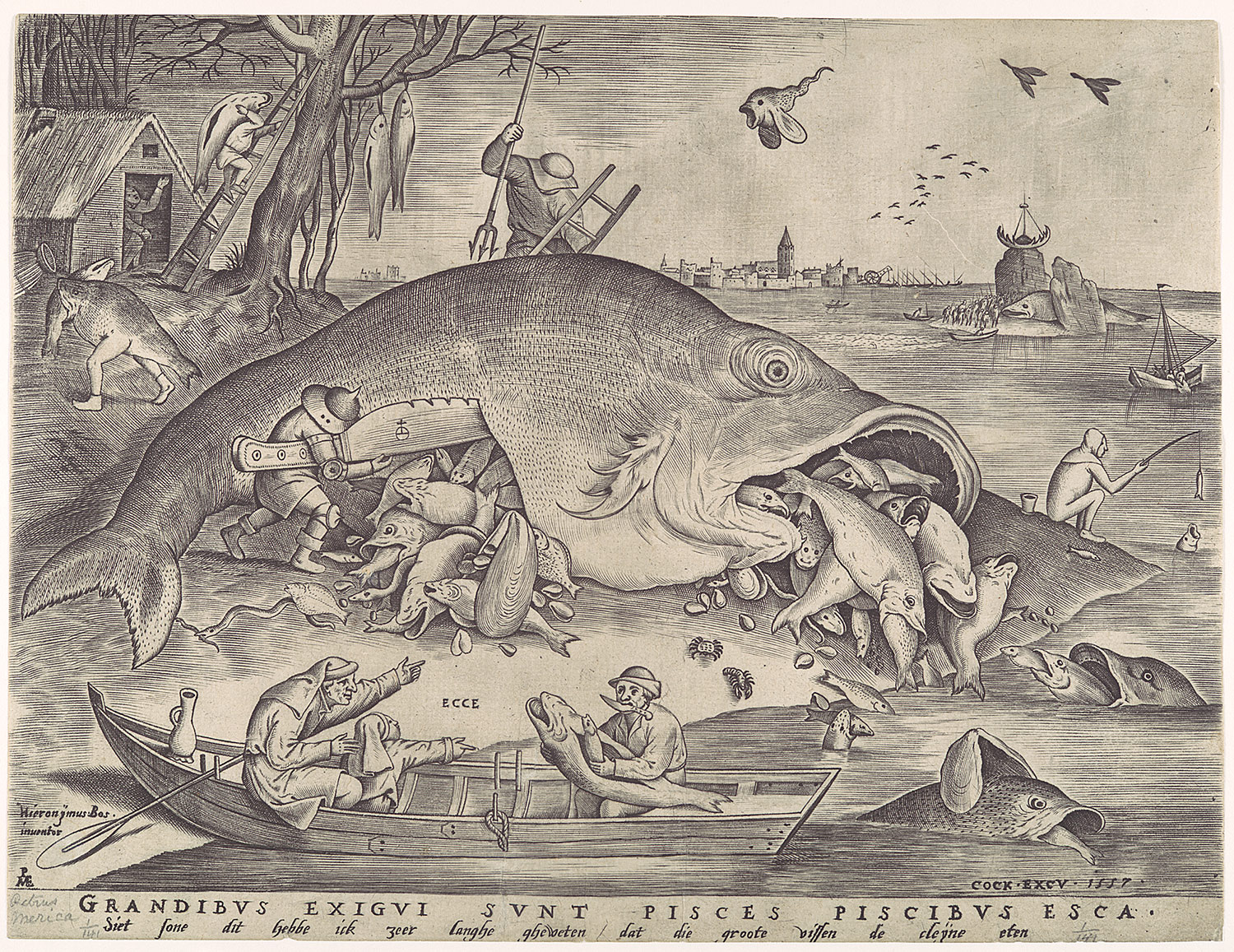
It is always the case of the stronger country wielding power over the smaller ones, as is common with the US and here with Japan. It is the old adage of the big fish eating the little fish. Sadly, that idiom is set to become historic as all the big fish are fast being wiped out from the Earth’s oceans. What does that say to the “big fish” countries: USA and Japan?
Wednesday, 24 February 2010

Monday, 25 January 2010

Friday, 25 December 2009

Monday, 21 December 2009
The mother tongue - bill bryson
I just finished this book The Mother Tongue by Bill Bryson. It is not a new release. It was written back in the 90's but I just stumbled across it during a visit to Vancouver back in the summer. It is a book about the history of the English language. Sound dry? No. It is a highly entertaining and readable volume. It is packed (packed) with great stories and histories of how the English language got to be the way it is.
Thursday, 17 December 2009
Online education is more effective than classroom
Read the story:
Online education is more effective than classroom
Classroom learning. The teacher-student model of learning is a highly ineffective way to learn.
How did our public education system get started? Why is this the way we are today?
A system that will create industrial discipline – show up, work, read, count
Schools resemble factories
-Show up on time
-Bells ring
-Teacher is the boss
-Commute to school = commute to work – preparing students
The education system is obsolete. Don’t reform it. Replace it.
Japan – your daily definition of insanity:
Doing the same thing over and over in hope of getting a different result
Alvin Toffler on the education system – speaking, toward the end about the Japanese school system
Online education is more effective than classroom
Classroom learning. The teacher-student model of learning is a highly ineffective way to learn.
How did our public education system get started? Why is this the way we are today?
A system that will create industrial discipline – show up, work, read, count
Schools resemble factories
-Show up on time
-Bells ring
-Teacher is the boss
-Commute to school = commute to work – preparing students
The education system is obsolete. Don’t reform it. Replace it.
Japan – your daily definition of insanity:
Doing the same thing over and over in hope of getting a different result
Alvin Toffler on the education system – speaking, toward the end about the Japanese school system
A laptop computer for under $100
Did it come from Toshiba or Samsung? No. Dell? No. How about SONY or Apple? Hardly. The netbook did not come from these companies, either. But once it appeared and it was popular, all these big, sluggish, inbred companies jumped on it, except Apple. The netbook, by the way, was the creation of Asus, in Taiwan.
Cherrypal. Yup. Cherrypal. That’s the company that’s cracked the $100 price point for a web browsing computer. Origins are in Silicon Valley and are now owned by Tristate Lifestyle Brands (Tristate Hong Kong Group Limited).
If these catch on you will see all the fat, bloated, greasy, drooling PC makers clamouring to produce their own sub-$100 PCs, likely for $129 due to Microsoft’s bullying in on the action, appearing soon.
http://www.pcworld.com/businesscenter/article/184709/cherrypal_offers_laptop_for_under_100.html
Cherrypal. Yup. Cherrypal. That’s the company that’s cracked the $100 price point for a web browsing computer. Origins are in Silicon Valley and are now owned by Tristate Lifestyle Brands (Tristate Hong Kong Group Limited).
PC maker Cherrypal has done something Nicholas Negroponte's One Laptop Per Child couldn't do: make a laptop that breaks the US$100 price barrier.
Cherrypal on Tuesday announced a no-frills laptop called Cherrypal Africa, which includes hardware usually found in smartphones. It can run the Linux or Windows CE operating systems, which are also found on cell phones.
If these catch on you will see all the fat, bloated, greasy, drooling PC makers clamouring to produce their own sub-$100 PCs, likely for $129 due to Microsoft’s bullying in on the action, appearing soon.
http://www.pcworld.com/businesscenter/article/184709/cherrypal_offers_laptop_for_under_100.html
Wednesday, 9 December 2009
The Warmest Decade on Record
Data has been collected about the Earth's temperature. Records extend back to 1850. 160 years. The Earth extends back 4.5 billion years. 160 years versus 4,500,000,000. The warmest decade on record? What can this possibly mean if records have been kept for just 16 decades versus 450 million decades. Data collected represents 16/450,000,000 or 0.0000035556% of all earth's climactic data.
The Thames used to freeze over and Greenland used to be green! The vikings named it from it's colour. In the grand scheme of history of the planet, that was not so long ago.
Past Decade Set to be the Warmest Ever
The Thames used to freeze over and Greenland used to be green! The vikings named it from it's colour. In the grand scheme of history of the planet, that was not so long ago.
Past Decade Set to be the Warmest Ever
Friday, 27 November 2009
The great global warming swindle

The climate is changing. The climate is always changing.
Scientists show that there is no connection between the human contribution of carbon dioxide and climate change / global warming.
Climate change is a political agenda. It is propaganda. Not science.
Why do we suppose CO2 is responsible for climate change?
CO2 = 0.054% of the atmosphere; how much CO2 is there in the atmosphere?
Humans are adding only a very small percentage.
Atmosphere has very small % of greenhouse gases.
Water vapour = 94% of greenhouse gases
IPCC Intergovernmental Panel on Climate Change
Formal US VP Al Gore – the definitive popular interpretation; comes from ice core surveys. That's it. What is the correlation between temperature and CO2 levels?
However, the link is the wrong way around. Temperature leads CO2. CO2 follows – a lag of 800 years.
CO2 is not a pollutant. It is natural. Humans produce a small fraction.
Humans and factories, volcanoes, animals and wildlife, dying plants and vegetation, and oceans. Oceans are #1 contributors of CO2 according to scientists – if you heat the ocean, it emits co2; the cooler, the more they absorb. Shoe we have a war on oceans?!
There is no evidence that CO2 has ever determined climate change.
How about Sunspots – how reliable are sunspots as an indicator of climate change?
Sunspots v. Temperature. In fact there is a direct correlation. The sun is driving climate change.
Androgenic global warming is unfounded and a lie.
visit: Wikipedia - The Great Global Warming Swindle
Watch: The Great Global Warming Swindle
Subscribe to:
Posts (Atom)